The Survey Script Framework
About the Framework
What’s The Survey Script Framework?
All 5 frameworks can be divided into 2 parts: 1 part “product-interest building” scripts, and 1 part “disqualification” scripts. This Survey Script Framework is one of those disqualifying situations where the goal is less about pushing a product and more about identifying qualities of a partnership. While this is the main goal, the angle in which the Survey (and the Compound Script Framework for that matter) is delivered is to disqualify, which also creates intrigue, allure, and interest through an indirect approach. While the information gathered helps the salesperson, it also provokes questions in the mind of the prospect without direct sales language.
In some markets with specific product or service offerings, the “product-interest building” scripts (CCF, No-Bull, & Stacking) can’t maximize the need at hand. Pushing product features and benefits don’t always spark the curiosity enough to move to next steps; or, sometimes, prospect qualification is more priority than established next steps. The Survey Script Framework, along with the Compound Script Framework can help draw interest and qualify better than the “product-interest building” frameworks.
The 5 H2H Frameworks:
The Survey Script Framework
The Compound Script Framework
When to Use The Survey Script Framework
I talk with my account strategists all the time about The Survey Script, but it is used selectively. Too indirect and the prospect misses the point. Too salesy and the prospect hangs up before you can realize there is a dial tone. Regardless of industry, the theme is more about prospect openness.
Products and services that work well with this framework include some commercial insurance, machinery, new or unique products to market for looking for product feedback or competitive data, commercial real estate investment companies, and others! On the other side of the table, industries receptive to survey script formats are industries such as manufacturing, companies with heavy machinery, e-commerce, architectural or general contracting, commercial property owners, and more. The Survey Script can also be good for calling a current customer base to gather information about their experience or about new products and services on the horizon.
Quick Prop (QP)
Hone-in (Hi)
Qualifying Questions (QQ)
Next Steps (NXTS)
What Does a No-Bull Script Structure Look Like?
The Survey Script is a structure designed to establish qualification, and as a bi-product create product interest, allure, exclusivity, and frankly, FOMO, with the prospect. This is different than in other frameworks because it is less focused on providing the VPT, and more geared toward provoking thought around the qualifying questions being asked of the prospect. In the CCF and No-Bull Script, each possess an aim to identify pain and generate interest throughout the conversation. Their goals also match: sell the NXTS. Additionally, qualifying questions are generally asked after interest is established.
Conversely, the Survey Script’s focus is to glean information from the prospect, create a sense of exclusivity in the product (or a perception of gated access), and showcase allure around what the selling company will do with the information. The Survey Script is all about maximizing the conversion of a conversation into next steps that can turn into new business. The H2H cold call component framework for The Survey Script looks like this:

Here is a simplified script breakdown to convey how the components work in our No-Bull Script Framework
1. Quick Prop
The first component of The Survey Script Framework is the QP. The QP is designed to get past the first few seconds and situate the prospect’s attention within the right frame. The instruction then is to provide a description of your offering and state a light benefit or feature.
Here’s an example from the SHP Survey Script:

2. Hone-in & Next Steps 1
The second component is where our approach differs the most from traditional appointment-setting formats in the CCF and No-Bull Script. In the second component, the Hi and NXTS 1 combine to make a statement. From there, either 1) place a pause rather than ask a question. We hold our question for the next component, but replace it with a gap of silence. This implicitly invites a prospect’s response without explicitly requesting one.
While we don’t cover this psychology much in this book, the general theory is that conversation gaps act as a catalyst for provoking response. By pausing here (which is easier said than done!), we:
- Provide prospects with time to think and digest your prior statement
- Enable prospect engagement
- Withhold a traditional Hone-in question since we will be asking qualifying questions in the following step.
Regardless of whether they engage, attempt to move to the third component to keep the conversation going.

3. Survey (Qualifying) Questions
Whether implicit or explicit permission is granted after component 2, begin with the first question in the Survey (Qualifying) Questions step. At this juncture, the answers we receive enable similar signs to those when we are in the CCF script. That’s because while we have received permission to continue, we haven’t necessarily built trust up enough to win a true conversation. As you collect data, thank the prospect and reassure them that the information will help greatly as you transition quickly into the next questions.
The survey should be seamless when done effectively (asking the questions while finishing up any notes from prior answers and documenting current ones as soon as possible). Give prospects an opportunity to express their thoughts, and even offer to “grease the wheels” by suggesting answers that others have given. This can give them a frame of reference while allowing the conversation to seamlessly continue. For instance, question 4 below asks, “How many sales leads or appointments do you need per month?” If the prospect is having trouble answering, you can offer a couple suggestions relevant to them:
“Some of our clients need two appointments per week, or eight per month, while some need more like eight per week, and thirty per month. Are these numbers within range?”
Providing options can jog their thinking, allowing them to answer quickly and keep the conversation going. As we wind down the questions, we ask for their email address (or confirm the one we already have), since this is vital information for continued follow-up. There is also a higher likelihood they will disclose their info when asked in flow with the others since questions or the topic of conversation. Ensure all answers are written down fully and clarify or confirm as needed. It’s always best to maximize the time now rather than attempt to call back later when they may not be available.

4. Next Steps 2
The fourth component transitions the conversation from information collection to commitment. At this point, we’ve asked questions around a topic, which the prospect has answered. The prospect can sometimes infer, based on questions asked, what direction next steps may bring. This can give the prospect a level of confidence and trust in the process. And, as our Conversion Probability Timeline states, the longer we are on a call, the higher chance NXTS are granted. Typically, since one-on-one conversations with decision makers or stakeholders are paramount, asking for an appointment to review answers and fit is optimal. We’ve found some companies prefer to opt out of an appointment-setting question, while some prefer to require it as a NXTS request at minimum. In other words, an appointment-ask may not be appropriate based on the industry. Remember, the point of the survey is to qualify and provide information for the salesperson. This should be sufficient OVER an appointment status NXTS disposition.

Survey Script Example 1 - Logistics Industry Origin to Distribution Industry Target
Here is an example of a real Survey script used by Superhuman Prospecting client SDRs for a logistics company that targeted the regional distribution industry:
Survey Script Example 2 - Cannabis Manufacturing to Cannabis Manufacturing Industry Target
Here is an example of a real Survey script used by Superhuman Prospecting client SDRs for a cannabis manufacturing company that also targeted the cannabis manufacturing industry:
Summary
In summary, The Survey Script is a framework within The H2H Method™ that provides an alternative strategy to traditional “product-pushing” scripts. The foundation for developing cold calling frameworks comes from how markets react to cold calls. The Survey Script was discovered through a combination of needs by the salesperson, mixed with studying how markets react to sales conversations. Be aware of not only what YOU need as a sales person (ie, appointments, qualification information, warm follow ups, etc.), but how the market responds. Know the H2H frameworks so you can adjust accordingly!
Order Your Copy
Trust Call
If you would like more examples or opportunities to learn if the Survey Script Framework works for your product and industry target, fill out the form below, or email me at rsvp@h2hsalesscripts.com.
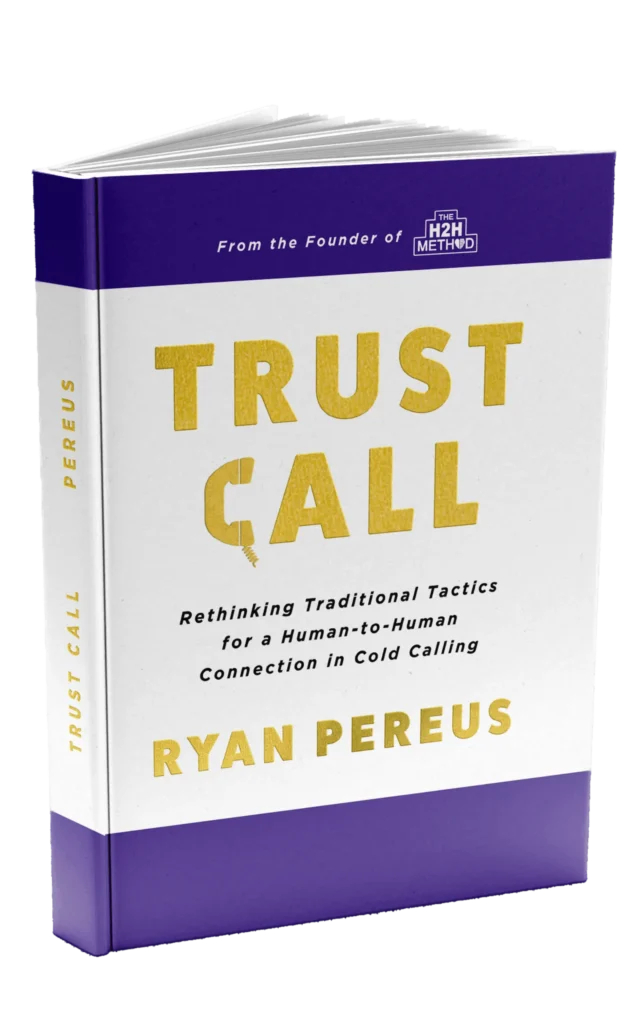
You can also check out my book Trust Call, which is available on Amazon. I dive into each framework in depth, and provide context as to how each framework files itself into the overall theme of building trust with prospects in modern cold calling.
Get In Touch
Contact us
Send us a message to learn how we can help improve your prospecting.