Slowing the Process to Speed the Trust at Merchants Bonding Company
A Different Kind of Sales Challenge On July 7, I had the opportunity to work with Merchants Bonding Company as a sales consultant,
The first undergraduate professional sales degree was established in 2000 by the University of Toledo in Ohio, making it the first university in the United States to initiate the program. Only 25 years have gone by, and even though there are now more than 100 sales programs across the nation in 2026, the movement is still very, very young.
For instance, do you know anyone in your circle who graduated with such a certificate? Probably about as many people as you know who have played professional sports—few and far between.
While the major is making waves, it is still a far cry from the number of graduates coming out of more traditional business disciplines like business administration, marketing, finance, accounting, and even strategic leadership. But something has changed in the ethos of our profession: there is now a real drive for dignity and advancement in a crucial business function that Mark Cuban, in How to Win at the Sport of Business, called the “lifeblood” of business.
What is even more fascinating is that while the rise of digital tools and A.I. has only gained momentum, the craving for sales excellence has deepened right alongside it.
You can see it not only in universities, but also in sales technology, outsourced sales development companies, sales improvement organizations, consultants, LinkedIn content, and now recruiting. The movement away from aggressive, commission-breathed salespeople pulled from the leftovers of white-collar recruiting pools is gaining speed. New-school programs, better professional training, recognized ethics, tools and tech-powered sales enablement, sales data, analytics, and a clearer path carved from a history of success are all helping reshape the profession.
I set the stage here to help you understand why my time at Elon was so cool.
It was a special four weeks for me—not just from a college-workshop testing perspective, but because it was intrinsically gratifying. I had always believed the work we do at SHP could be helpful for students, but there was still this invisible gap between what we were learning in an otherwise esoteric topic and how that would translate to and be received by a group of young, eager students encountering many of these practices for the very first time.
To finish the workshop successfully with the students at thatthat level of connection was, to me, nothing less than electric.
I had the opportunity to speak to these students in a web-conference format, with our final week wrapping up in person.
The idea came from observing the growth of college sales programs while also drawing on the years of data and insight we have collected from 10 years of sales phone calling at SHP. I knew what we had would be pure gold—not just for the companies we work with, but also for college and university programs in need of new curriculum, especially around the seemingly ungodly topic of cold calling.
Before I share more about the subject matter, I want to preface this by saying that translating a high level of cold calling philosophy, strategy, values, frameworks, tactics, and techniques—material that is normally used to teach current professionals, or at least people with some professional sales experience—to first-time college students was difficult for me. The process felt like casting water from a stone.
But in time, the alchemy happened.
I had never trained a class at this level, and I had never put significant thought into how to word these ideas in a way that would be received well enough to hold the attention of students new to the topic. Thankfully, Elon University sales professor and director of the program’s sales center came to my rescue.
Chris and I began the conversation over a year ago, in March 2025.
And fun fact: Chris and I met through none other than—you guessed it—a cold phone call.
I had researched some sales professors to see what kind of curriculum they were using to teach students the basics of cold calling. I made some calls and sent some emails, and sure enough, I got a response from Chris. We talked about his current curriculum, a cold call competition his students would be participating in, and how The H2H Method could fit into their preparation.
It was a good match.
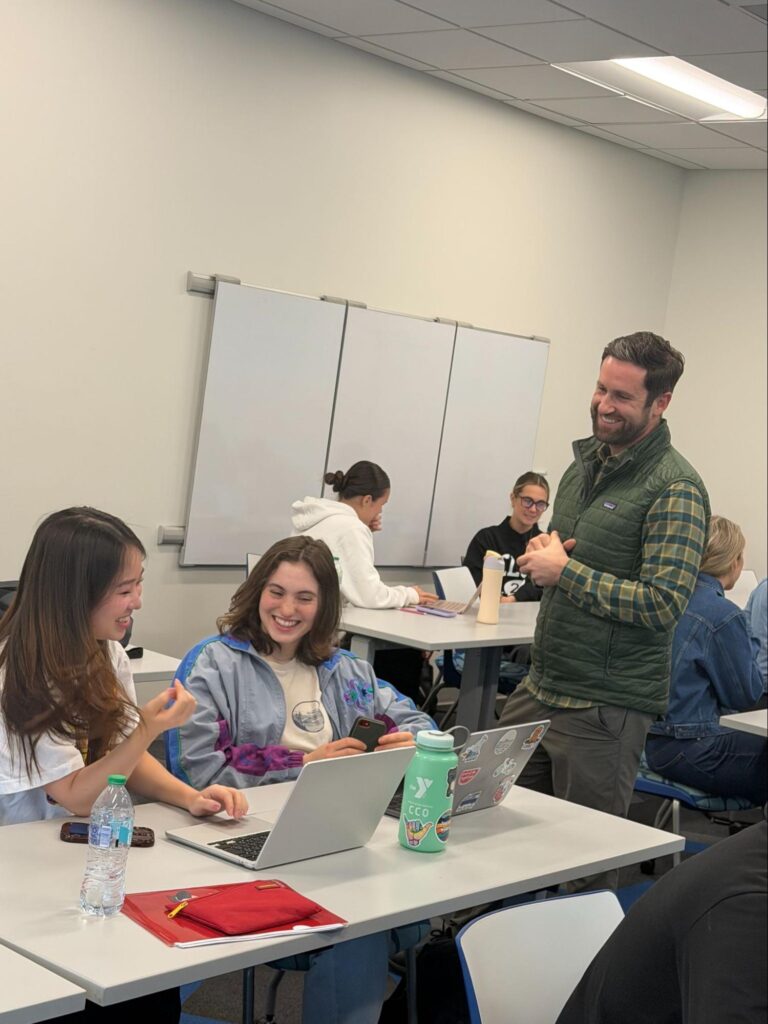
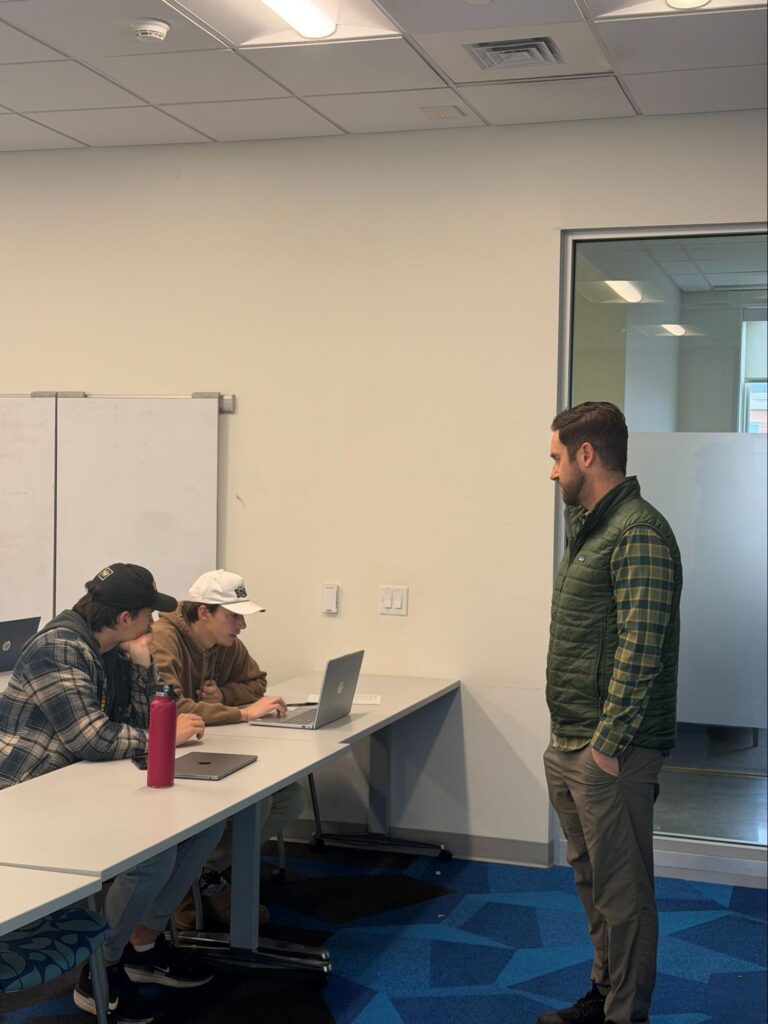
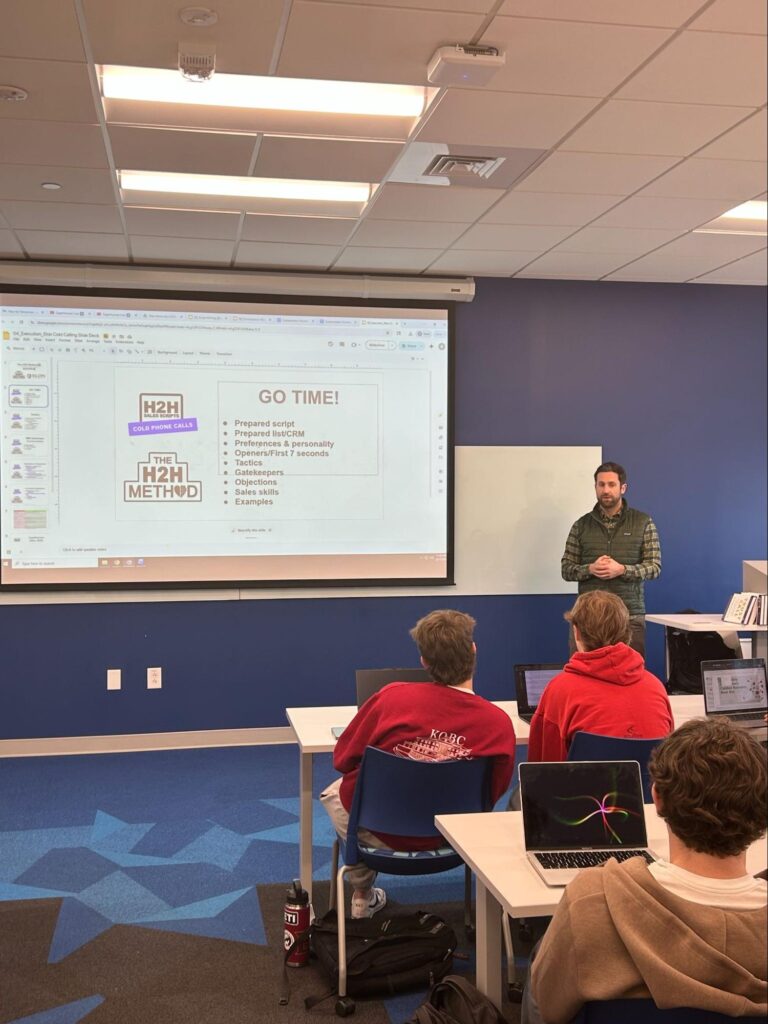
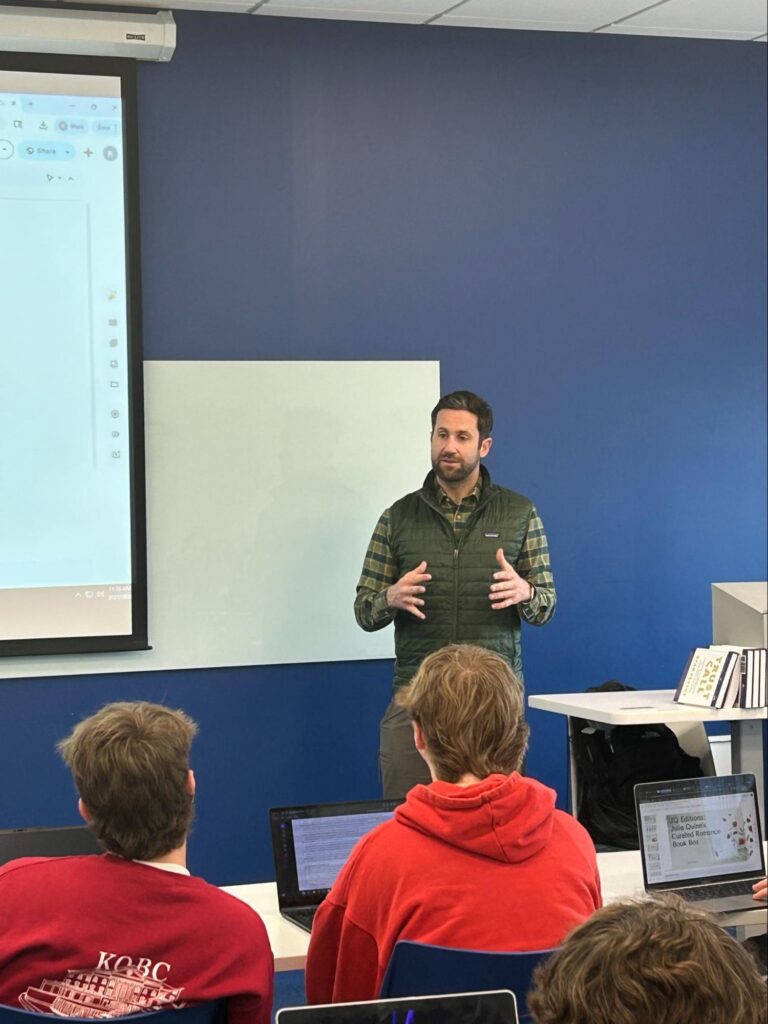
Once we established mutual benefit, we began to plan.
In early 2026, I put pen to paper—or, more accurately for 2026, finger to touchscreen. I pulled from past slide decks, curated content from my cold call book Trust Call, and various data and resources from Superhuman Prospecting’s databases.
With Chris serving as a rich resource for helping translate what the students could realistically handle—not just in terms of content density, but also quantity—we were able to structure a baseline outline for each of the four weeks. The workshop covered the essential topics needed to get students started with cold calling:
To reiterate, teaching students is no easy task.
For starters, much of the language and quantity of material I use in professional environments is designed to impress clients, train experienced sales employees, support podcast conversations, or serve as written content for a more advanced audience. A lot of that simply goes out the window in a classroom like this.
The biggest challenge—and honestly, in reflection, this may just be a me issue—was conveying such an esoteric sales topic to young people experiencing it for the first time, many of whom were not yet committed to the sales profession but were curious enough to take the class and see whether it might be for them.
Thankfully, with Chris’s help, we iterated weekly and developed our first workshop into a format built around a focused 25-minute lecture followed by a workshop exercise that students would begin in class and complete afterward.
Once the lecture slides and workshop items were finalized, boom—we were off to greet the students with this new initiative.
March 6, 2026, was the fourth week of our workshop.
I had met with the students three weeks prior on Zoom, and I will admit I was nervous about how they were responding to the topics. Were they bored out of their minds? Did they hate the idea of cold calling? Were they just doom-scrolling on their phones the whole time?
I had no idea.
But just like in cold calling, feedback is our greatest teacher.
I was ecstatic to be at Elon.
The three weeks prior had, in fact, been solid. We had productive lecture time covering theory, script writing, and—even to my surprise—a bit of class participation. It was time for our final in-person workshop, just days before the start of their competition sponsored by Grainger.
So finally meeting the students in person meant we could capstone this small pilot project with a much more practical, face-to-face application, combined with spontaneous dialogue as it came up.
I live in the Philadelphia area, so I made the seven-hour drive the night before, on Thursday. The next morning, I met Chris for breakfast early to finalize the agenda for the two morning classes ahead of us.
Ironically, that was the easy part.
Most of that breakfast was me drilling him with question after question because I was so curious about his background in sales education, the symposiums he speaks at, and the doctoral work he did before his time at Elon. Wild.
What I kept thinking during that conversation—after all these years of sales being treated like a bottom-feeder white-collar job—was this: There are true sales intellects out there who study our craft for a living. Amazing.
It was as enlightening as it was promising for our profession.
After breakfast, we were ready.
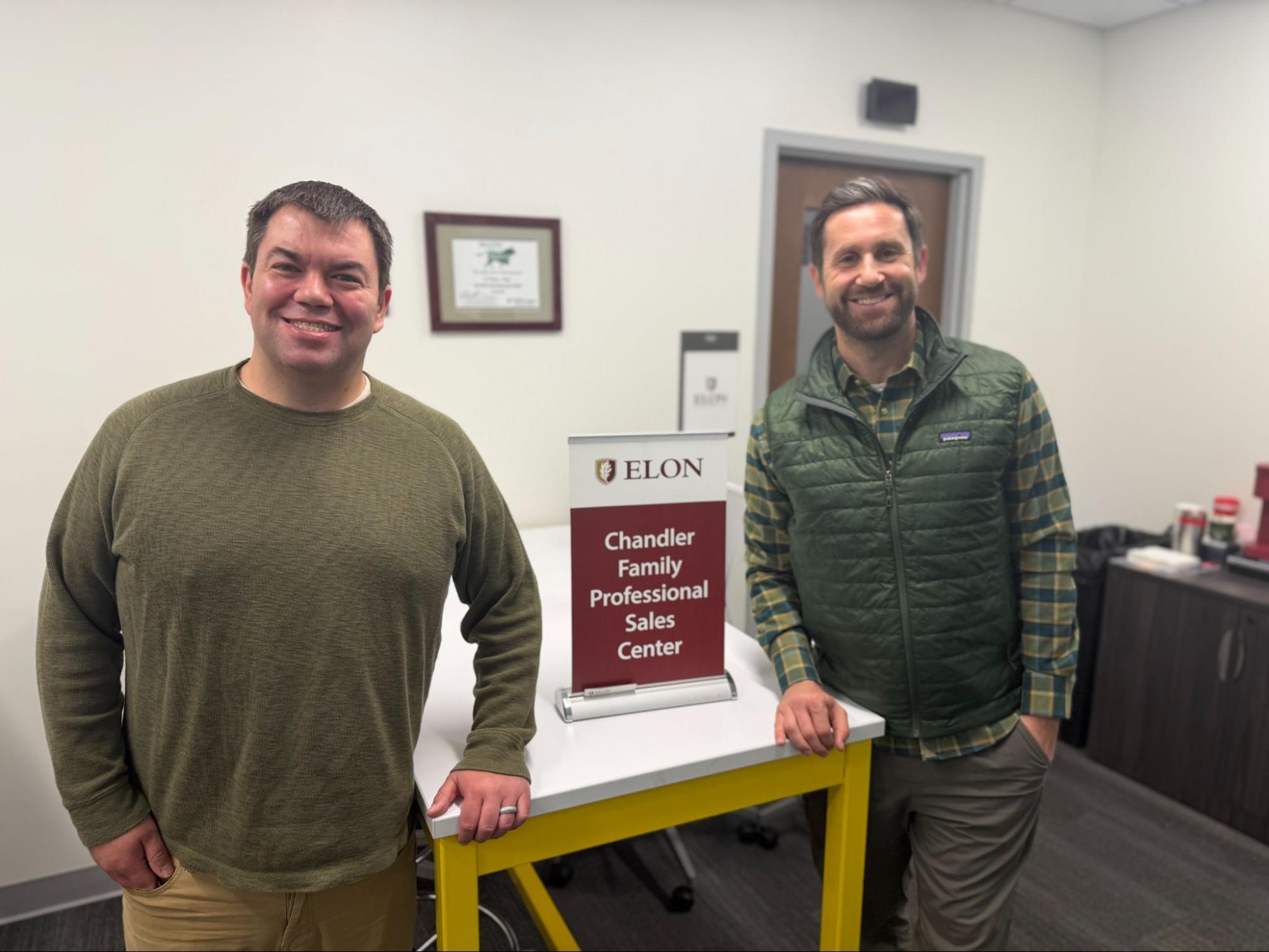
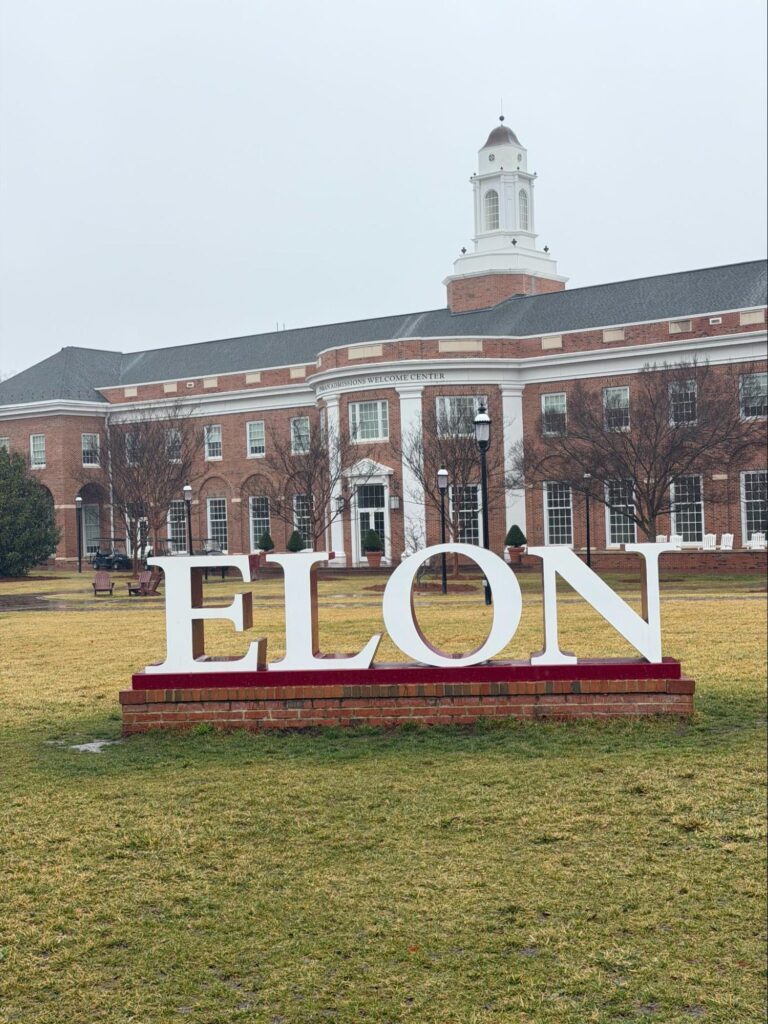
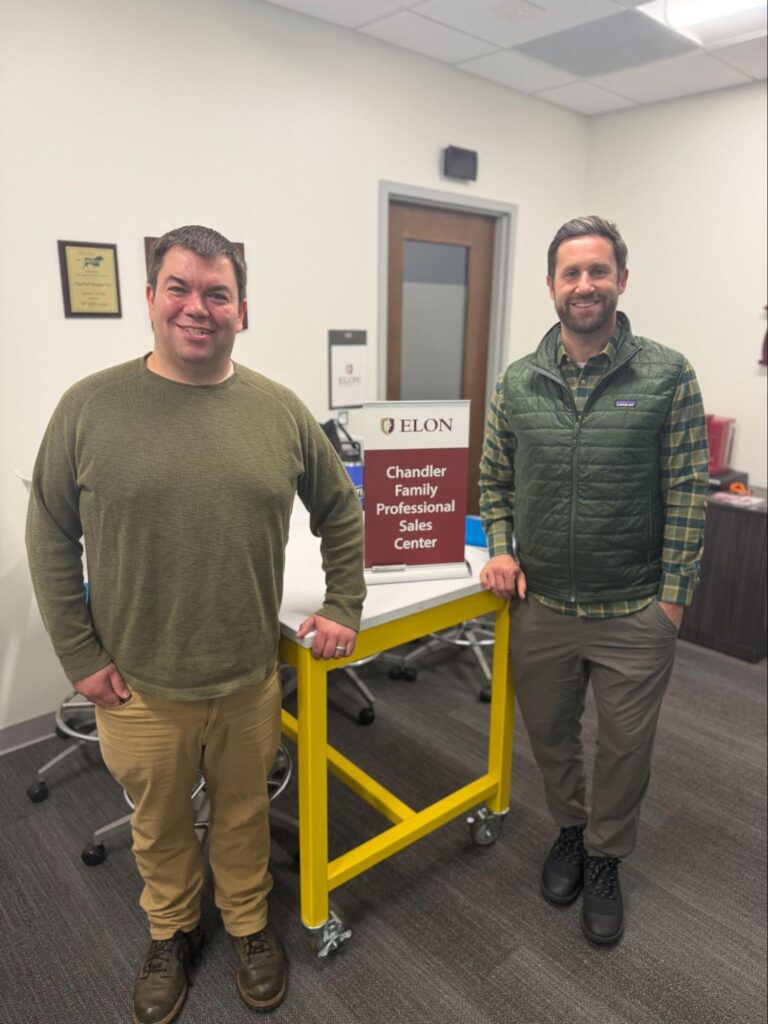
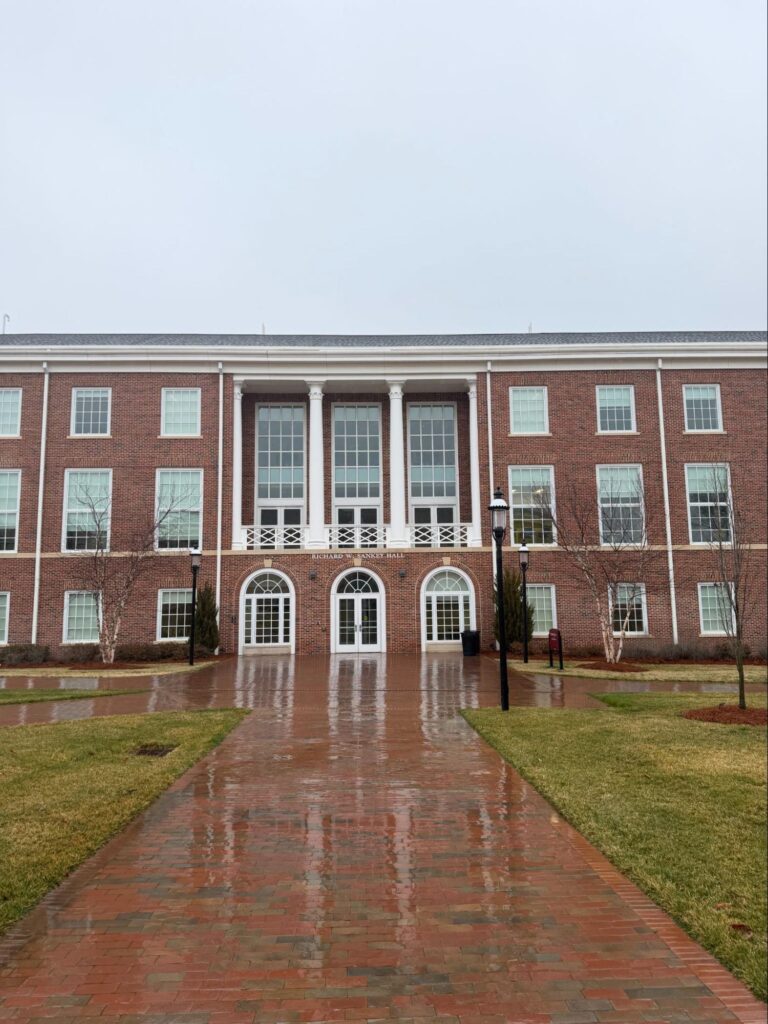
We arrived at Richard Sankey Hall, home to the Chandler Family Professional Sales Center within the Martha and Spencer Love School of Business. As you can see from the images, they even have their own sales lab with a demo room fully equipped with two-way video recording.
Honestly, that is my favorite place to be in the world: in front of a prospect.
Listen, I’ll get to the chase: the two sessions with the students were nothing short of electric.
I give them so much credit for their attention, their questions, their willingness to role-play in front of the group, and their eagerness to understand this unpopular and sometimes hated topic.
This final meeting included presenting cold call scripts from example companies that had been provided beforehand, lecturing a bit about objections, listening to a live cold call from one of our SHP team members, and then getting into role play.
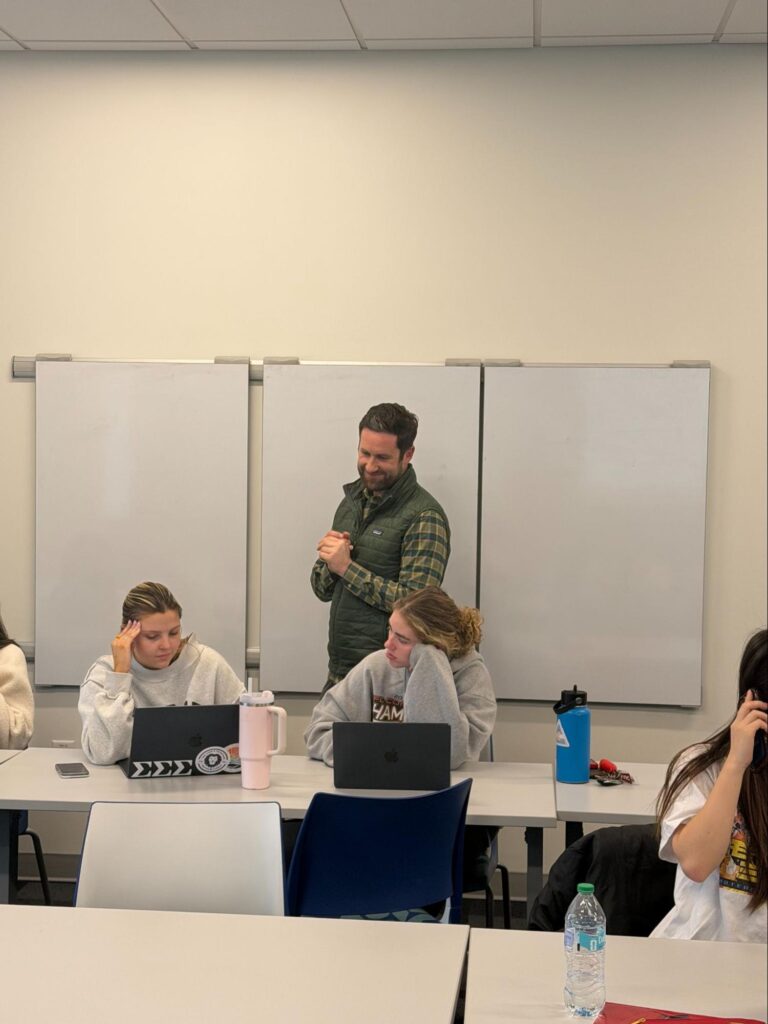
As you can probably tell from the pictures, I may have been having even more fun than they were.
But again, full credit to these first-time sales students for diving in with each other as they used these lessons to prepare their own sales strategies and scripts for the Grainger competition.
I came out of it glowing.
It may or may not be obvious, but teaching sales to students has been a dream of mine for a while. So to see this fully evolve into what felt like a magnum opus—hopefully only a rookie’s first appearance—meant a great deal to me.
I cannot wait for what comes next and to see how these class workshops grow and advance.
Many thanks to Elon University, Chris Nelson, and all the students for allowing me to take part.
A Different Kind of Sales Challenge On July 7, I had the opportunity to work with Merchants Bonding Company as a sales consultant,

Cold calling has been labeled everything from “dead” to “desperate” for decades. Yet in boardrooms and start-ups alike, from enterprise-level sales teams to